


Osteochondrosis of the cervical spine is a degenerative disease characterized by damage to the intervertebral discs.As a result, the discs, vertebrae and joints of the cervical spine are affected, and cartilage is destroyed.The disease is prone to progression and, in the absence of adequate treatment, can lead to serious complications - headaches, circulatory disorders and even hernias.With osteochondrosis of the cervical spine, instability of the vertebrae can occur, up to their displacement.This, in turn, accelerates the progression of the disease, destroying the spine and exacerbating symptoms.
Symptoms of the disease
In the early stages, the disease occurs practically without symptoms - a person may feel slight pain in the cervical spine after intense physical activity or prolonged sitting in a tense position, after sudden movements and tilting of the head.
The key clinical manifestations of the disease are:
- headaches;
- dizziness and impaired coordination of movements;
- slight crunching sound when moving the head;
- general weakness.
Less commonly, the symptomatic picture of osteochondrosis is supplemented by weakness of the hands, numbness of the tongue and impaired speech functions, problems with breathing, vision and hearing, increased sweating, and high blood pressure.In most cases, several of the listed manifestations are observed at once.

In general, the symptoms of osteochondrosis are not obvious; they are often masked by painkillers.This is the danger of the disease: most of the signs of degenerative lesions are similar to the manifestations of other pathologies, which makes it difficult to diagnose cervical osteochondrosis.Thus, dizziness may indicate inflammation of the middle or inner ear, spasms of cerebral vessels may indicate problems with the vestibular apparatus.The same applies to headaches.In addition to osteochondrosis, it accompanies more than a dozen other disorders: from pinched nerve roots and arterial hypertension to increased intracranial pressure and oncological pathologies.
A connection has been established between the cervical spine and high blood pressure.Osteochondrosis is characterized by surges in blood pressure during the day; prolonged hypertension is not typical for this disease.As a result of reflex irritation of nerve endings and short-term spasms of blood vessels, spasmodic daily dynamics of arterial hypertension are observed.Increased pressure with osteochondrosis of the cervical spine can be accompanied by headaches, pain in the limbs, decreased sensitivity in the collar area, surges in blood pressure after stress, and muscle tension.However, this symptom is also observed in other diseases.
Stages of cervical osteochondrosis
To facilitate the diagnosis of cervical osteochondrosis, 4 stages of the disease are distinguished.This is a rather arbitrary division, since most of the symptoms of osteochondrosis can also manifest themselves in other disorders.In addition, the actual degree of tissue degradation in the cervical spine may not correspond to the external manifestations of symptoms.
- The first stage of osteochondrosis is preclinical.At first, the symptoms are mild and are often associated with stress or other diseases.There is an unpleasant stiffness in the neck, pain when bending or sharply turning the neck.In the initial stages, it is very effective to treat osteochondrosis of the cervical spine with the help of osteopathy, exercise therapy and manual therapy methods, or simply increase your physical activity and adjust your diet.
- Second stage.The pain becomes constant and increases significantly with a sharp turn or bend.Intense cephalgia, rapid fatigue, and numbness in different parts of the face appear.
- Third stage.The formation of a hernia is often accompanied by dizziness and weakness of the arms, pain radiating to the back of the head and shoulders.
- The fourth stage of cervical osteochondrosis.Intervertebral discs are destroyed, and the tissues between them harden.Infringement of the nerve roots causes difficulty in movement, acute pain and dizziness, and tinnitus.
The stages of cervical osteochondrosis are characterized by changes in the discs, cartilage tissue and synovial membrane.The greater the degeneration, the higher the degree of the disease.All changes are clearly visible on MRI and CT, as well as on x-ray.
What causes cervical osteochondrosis and who is at risk
Cervical osteochondrosis is provoked by the following etiological factors:
- Sedentary lifestyle and lack of adequate physical activity.
- A tense, physiologically unnatural posture during work - for example, when sitting at a computer, a person is often forced to lean forward.
- Too much physical activity - often observed in those who engage in professional or amateur sports.
- Any factors that contribute to poor posture - wearing uncomfortable shoes, poor posture during sleep.
- Excess weight, which is often caused by poor nutrition.
- Aging of the body and metabolic disorders.
- Hormonal pathologies and intoxications.
- Frequent stress, severe nervous tension, local hypothermia.
In addition, according to the theories of clinical medicine, cervical osteochondrosis can be caused by genetic predisposition, features of the anatomical structure of the cervical area, the consequences of injuries or infectious diseases.
Osteopathy takes a broader view of this problem and views the body as a whole, where even the slightest deviation in one part causes changes throughout the body.For cervical osteochondrosis, an osteopathic doctor determines the true cause of the disease, and only after that begins treatment.For patients, this means not only relieving neck pain - the functioning of the brain, musculoskeletal system, and internal organs is also normalized.After many years of suffering, relief comes; without drugs and operations, lost anatomical mobility and lightness return.
Why is cervical osteochondrosis dangerous?
A huge number of vital vessels are concentrated in the cervical area, so any violation in this area is fraught with unpleasant consequences, including oxygen starvation, hypertension, and vegetative-vascular dystonia.
With cervical osteochondrosis, the segments of the spine that control the functioning of the elbow joints, thyroid gland, hands and other organs are affected.Therefore, if the disease is not treated, there is a high probability of pinched nerves and compression of blood vessels, which negatively affects the functioning of absolutely all body systems.
How to treat a disease using osteopathic methods
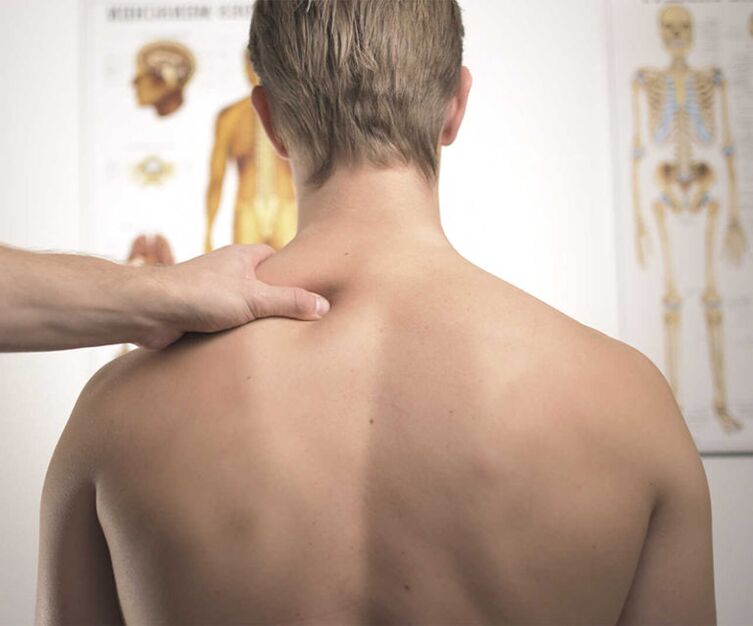
It is possible to achieve the highest possible results in treating the disease only with an integrated approach that combines massage, medications, and physical therapy.Osteopathy is effective in the treatment of osteochondrosis.Diagnostic and therapeutic manipulations are performed using methods of structural, visceral and craniosacral osteopathy.They eliminate pathological phenomena that cause pain in the cervical area.
An osteopath for cervical osteochondrosis optimally balances the work of muscles and ligaments in the area of the cervical vertebrae.A gentle gentle stretching of the spinal axis occurs, thereby improving its blood supply and increasing flexibility.Osteopathic treatment has no side effects and is absolutely safe.Before developing a treatment program, the osteopath conducts a thorough diagnosis to determine the condition of organs and systems.In this case, the examination concerns not only the cervical vertebrae, but also adjacent tissues.This is important in order to localize the area of distribution of pathological processes and find the main causes of their occurrence.
Based on the results of the examination, suitable treatment is selected aimed at solving the following problems:
- Restoring the anatomically correct position of the cervical vertebrae and the spinal column as a whole, as well as normalizing the functioning of organs and adjacent tissues.
- Reducing tension in ligaments, muscles and capsules in which internal organs are located.
- Improving blood circulation in the affected areas, normalizing adequate tissue nutrition and oxygen supply to the spine.
- Restoration of innervation of the limbs and internal organs.
- Activation of the body's own resources in order to speed up the recovery process after pathology.
It is recommended to combine osteopathic treatment with manual therapy, physical therapy and massage.The scheme of procedures and their composition are determined individually, based on the stage and characteristics of cervical osteochondrosis in each individual patient.
Osteopathic treatment involves only the use of the doctor's hands; no other medical equipment is needed.Unpleasant symptoms of the disease are eliminated along with the causes that caused it.Osteopathic treatment is based on a gentle, painless effect on organs and tissues, and treatment techniques are aimed at the complete restoration of all body functions.
Exercise therapy for osteochondrosis
A simple and accessible (including at home) additional way to treat the disease is physical therapy.This direction is quite effective because it allows you to strengthen the neck muscles, restore blood supply to damaged areas, and compensate for the lack of physical activity in everyday life.Exercise therapy can be supplemented with swimming, gymnastics in water, and jogging.With osteochondrosis, the intensity of exercise does not play a key role; regularity is important.Therapeutic exercise, first of all, strengthens the entire neck, thereby replenishing the insufficient functionality of the spine.
In addition, exercise therapy is designed to:
- teach patients to relax the muscles and ligaments of the neck, shoulder girdle, upper and lower extremities;
- strengthen the cardiovascular and respiratory systems;
- activate blood circulation in the cervical spine;
- improve trophism of soft tissues and myofascial apparatus;
- increase the mobility of intervertebral joints;
- to form the body’s tolerance to physical activity;
- increase range of motion.
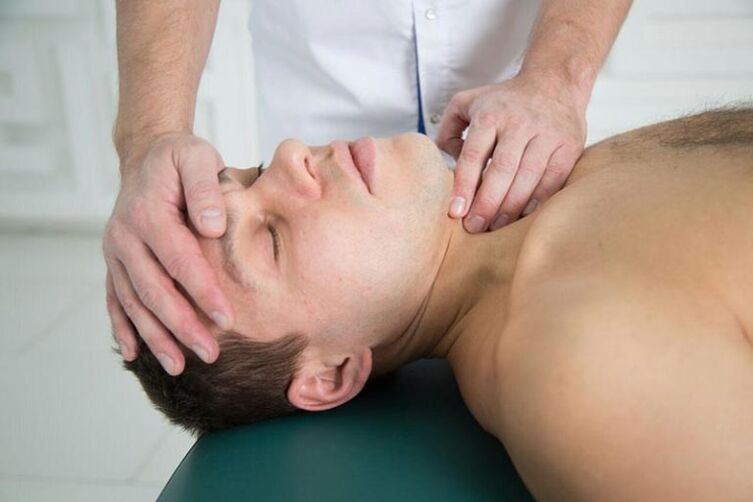
To solve these problems, static and dynamic breathing exercises, special exercises aimed at developing neck muscles, isotonic and static exercises for ligaments, as well as general strengthening complexes are used.In combination with other methods of treating osteochondrosis, exercise therapy provides positive dynamics at any stage of the disease.
Isotonic exercises under the supervision of a physical therapy specialist reduce the severity of pain, and dynamic and static complexes increase strength endurance and improve neck mobility.As a result, the motor abilities of patients are restored.This significantly improves their psycho-emotional state, has a beneficial effect on the tone of the deep muscles of the spinal column, eliminates spasms and improves coordination abilities.Positive dynamics when using exercise therapy methods are also observed on the cardiovascular system - blood pressure and pulse are normalized, physical endurance increases and the recovery period after exercise is reduced.The kinesitherapy system is also successfully used - exercises in suspension systems for neuromuscular activation.They painlessly restore movement and improve joint and muscle function.
Exercises in a kinesitherapy unit painlessly activate the muscular frame and deep stabilizing muscles.This allows you to develop all areas of the spine, stabilize joints, and improve the functioning of muscles and tendons.
This installation gives effective results due to the fact that it allows you to “turn off” the superficial muscles and work only with the deep ones.Exercises are performed in a kinematic chain.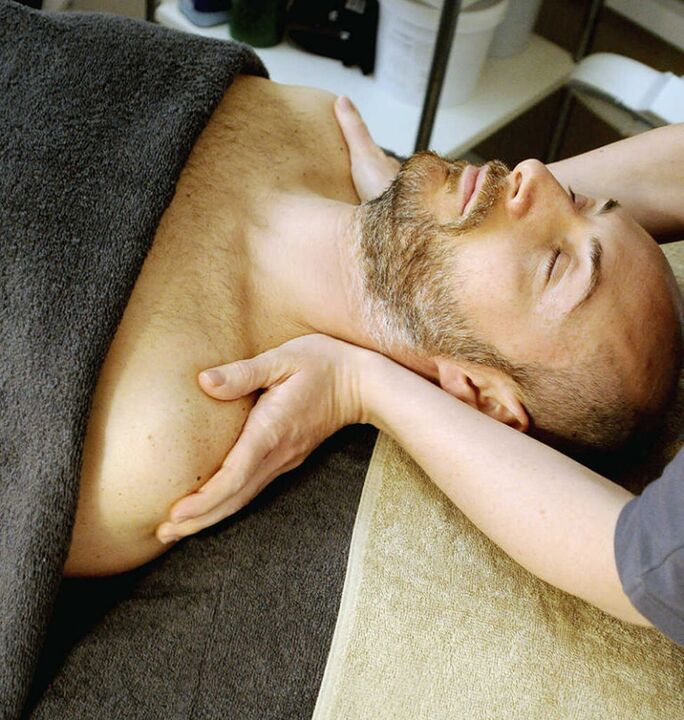 The sling system precisely controls the body.
In an anti-gravity state, the patient can perform exercises of any complexity, since the kinesitherapy unit neutralizes gravitational loads on damaged areas.This allows you to restore motor activity through neuromuscular activation.
At each subsequent session, the loads gradually increase, pain and stiffness go away, and the anatomical mobility of not only the neck, but also the entire musculoskeletal system is normalized.The patient's correct motor stereotype (motor pattern) is restored.
Strengthening the muscles of the shoulder girdle, for example, through regular exercise with light dumbbells, will also be quite effective.However, lifting weights (weights, barbells) is contraindicated.Regular swimming is also beneficial, helping to unload and relax the spine.
Massage for osteochondrosis
For osteochondrosis, massage techniques can also be very effective, since a properly performed massage:
- improves blood circulation;
- reduces the risk of vascular spasms by reducing muscle tone;
- relieves pain;
- improves general condition.
However, massage and manual therapy should be used with extreme caution, since incorrect or excessive exposure to sore areas in the cervical region can only cause harm.
Preventive measures for osteochondrosis
With osteochondrosis of the cervical spine, most negative actions can be minimized.But only in case of correct and timely prevention.You should think about preventing the disease in childhood - poor posture or flat feet in a child is a reason to consult a doctor.
The basis of preventive measures for osteochondrosis of the cervical spine is a correct lifestyle.These include reasonable and dosed physical activity, periodic physical activity with a sedentary lifestyle, healthy eating, and body weight control.
When the first symptoms appear, you should pay attention to the following points:
- If your profession requires a sedentary lifestyle, you need to choose an ergonomic chair that supports your entire back - from the lower back to the top of the head.
- During sedentary work, it is advisable to perform a set of special exercises for the neck every hour.
- The bedding set should be supplemented with an orthopedic mattress and a firm low pillow.
- It is not recommended to sleep on soft beds and sofas with armored mesh.
- In your free time, it is recommended to walk more and do physical exercise.Better - medicinal.
- But it is better to exclude strength training and traumatic sports.
- During training, you need to keep your spine straight and avoid sudden jerks.
- When doing housework, you should not stand on tiptoes for a long time or keep your arms raised high above your head.
- It wouldn’t hurt to take a course of therapeutic and preventive massage of the cervical-collar area 2-3 times a year.
Don't forget about proper nutrition.The diet should include a sufficient amount of protein, vitamins and minerals; if possible, it is advisable to eat more sources of natural collagen - seafood, jellied fish, jelly.Giving up bad habits helps maintain active blood supply to the intervertebral discs.
Conclusion
Osteopathic correction for cervical osteochondrosis is the path to a healthy life.Irritation and compression of nerves by muscles or fascia negatively affects the functions of internal organs.
For this reason, osteopathic treatment aimed at restoring the position of the skull bones and working with the fascia allows:
- normalize heart rate;
- improve the secretory functions of the stomach;
- eliminate the causes of dysbiosis;
- normalize intestinal motility;
- correct your posture.
Strained nerves during osteochondrosis fix the ribs, contribute to one-sided tilt of the body, form pain and scoliosis.Therefore, osteopathic treatment of the cervical region allows you to change your posture.
The disease is often caused by natural aging of the body.Osteopathic correction sessions make it possible to eliminate those unpleasant restrictions that are associated with age-related changes in cartilage tissue.
The doctor even finds hidden causes of vasoconstriction and pathological changes in the spine, since he considers the body as a whole.As a result of this effect, the correct functioning of not only the spinal column itself is restored, but also those structures in which changes have worsened the blood supply to the discs.
By identifying and eliminating the underlying causes, the natural relationships of tissues and organs are restored, pressures and tensions are relieved.
The result of complex osteopathic treatment is the elimination of headaches, dizziness, morning stiffness and other unpleasant symptoms.Good health and performance are restored, and the number of acute attacks is significantly reduced.
A healthy and active lifestyle is the best way to maintain the results of osteopathic correction.